Structure and escape
Fire doors and fire dampers
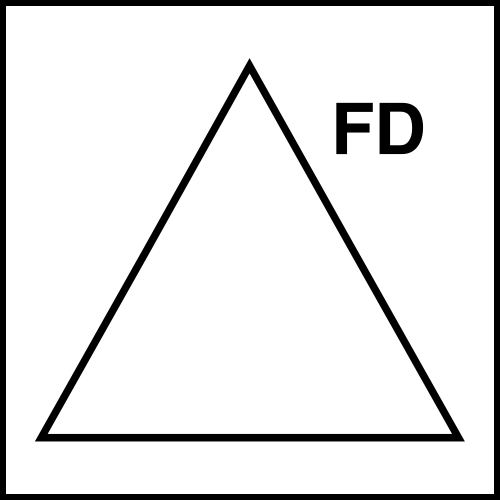
A division holds the fire only if its openings hold it too: fire doors close the passages and fire dampers cut off the ventilation ducts.
Key facts
- A door in a fire division has a fire resistance matched to the class of the division it stands in.
- Stairways passing through more than one deck are enclosed by walls of at least class A-0, with self-closing doors on all levels.
- Doors in the walls of category A machinery spaces are gastight and self-closing.
- Self-closing doors must not be held open with hooks or other mechanical holders. The only holders allowed are remote-release ones, which let go by themselves when the release system fails or the power drops.
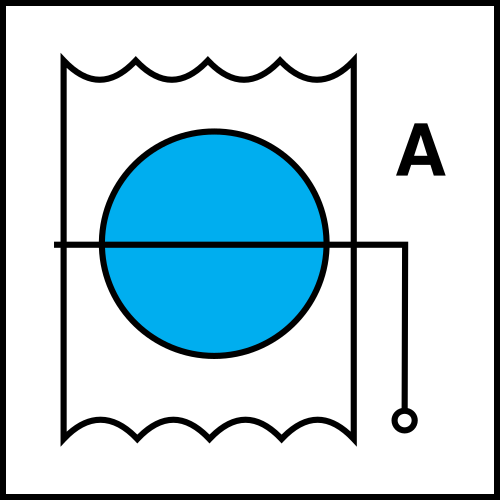
- A fire damper in a ventilation duct maintains the fire resistance of the division the duct passes through. A smoke damper only limits the flow of smoke and gases; it gives no fire resistance.
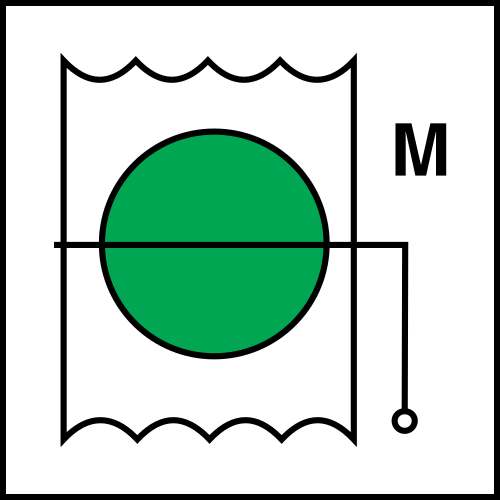
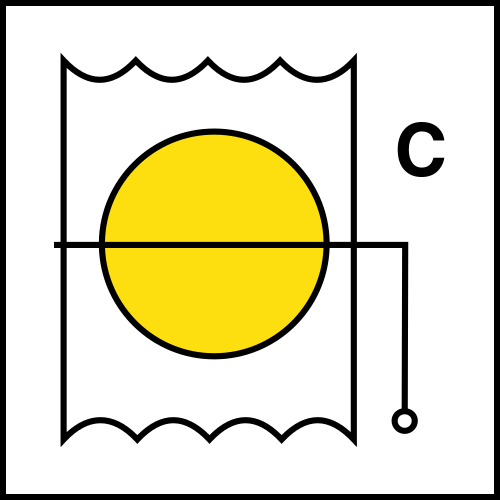
- Closing the fire doors, the dampers and the ventilation shut-offs is one of the first actions after a fire alarm. Who does it, the muster list says.
How it looks in practice
- Day to day, the fire doors on the stairways and in the passages stand open, because the whole crew walks through them. Electromagnets hold them. On a fire alarm the magnets let go and the doors close by themselves.
From the deck: sea practice, not regulation. Details vary with the ship and the owner.
On the fire control plan
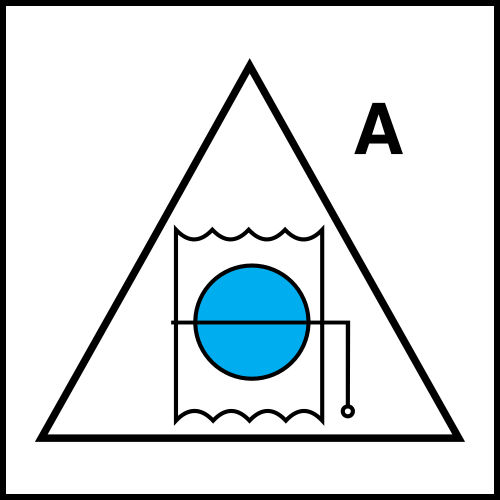
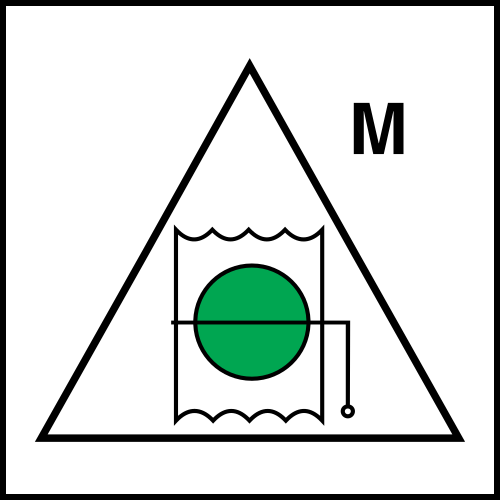
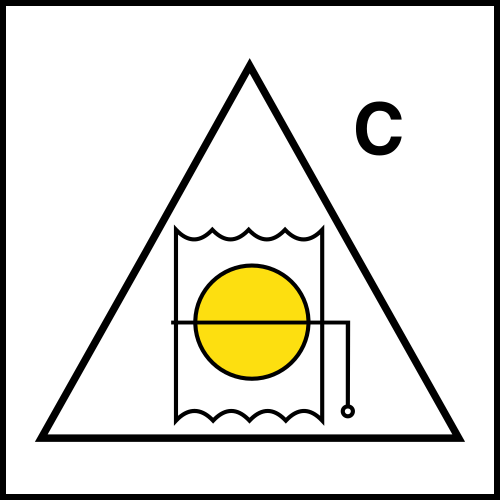
These are not bulkhead signs: a system is marked with its symbol on the fire control plan (IMO res. A.1116(30), table 3).
Legal basis
SOLAS II-2/9 (openings in fire divisions: doors, stairway enclosures, machinery space doors, dampers).
This is not a legal text: when in doubt, the current wording of the Convention and the FSS Code decides.